


Details
Overview
Strategic Positioning of the Republic of Moldova


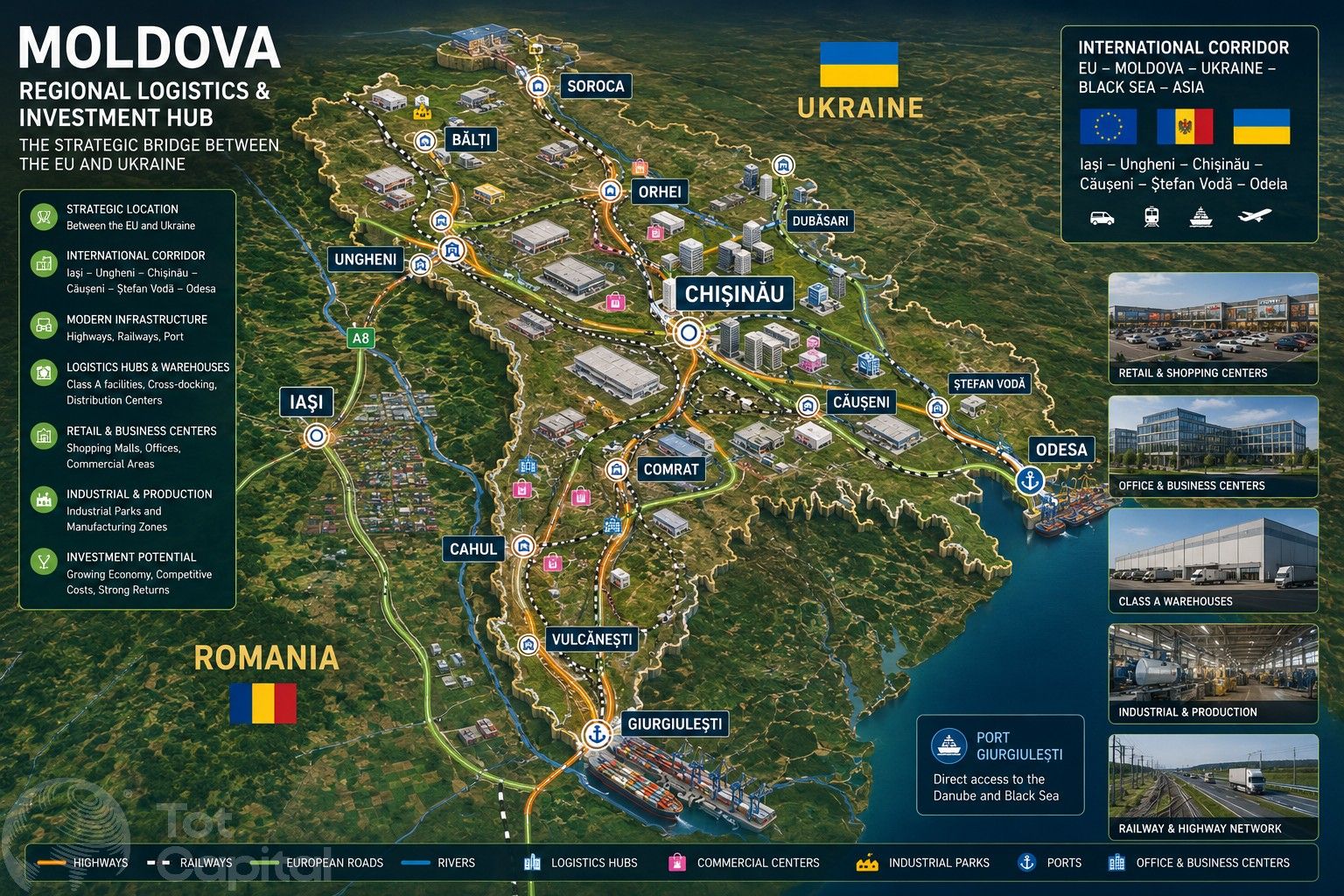
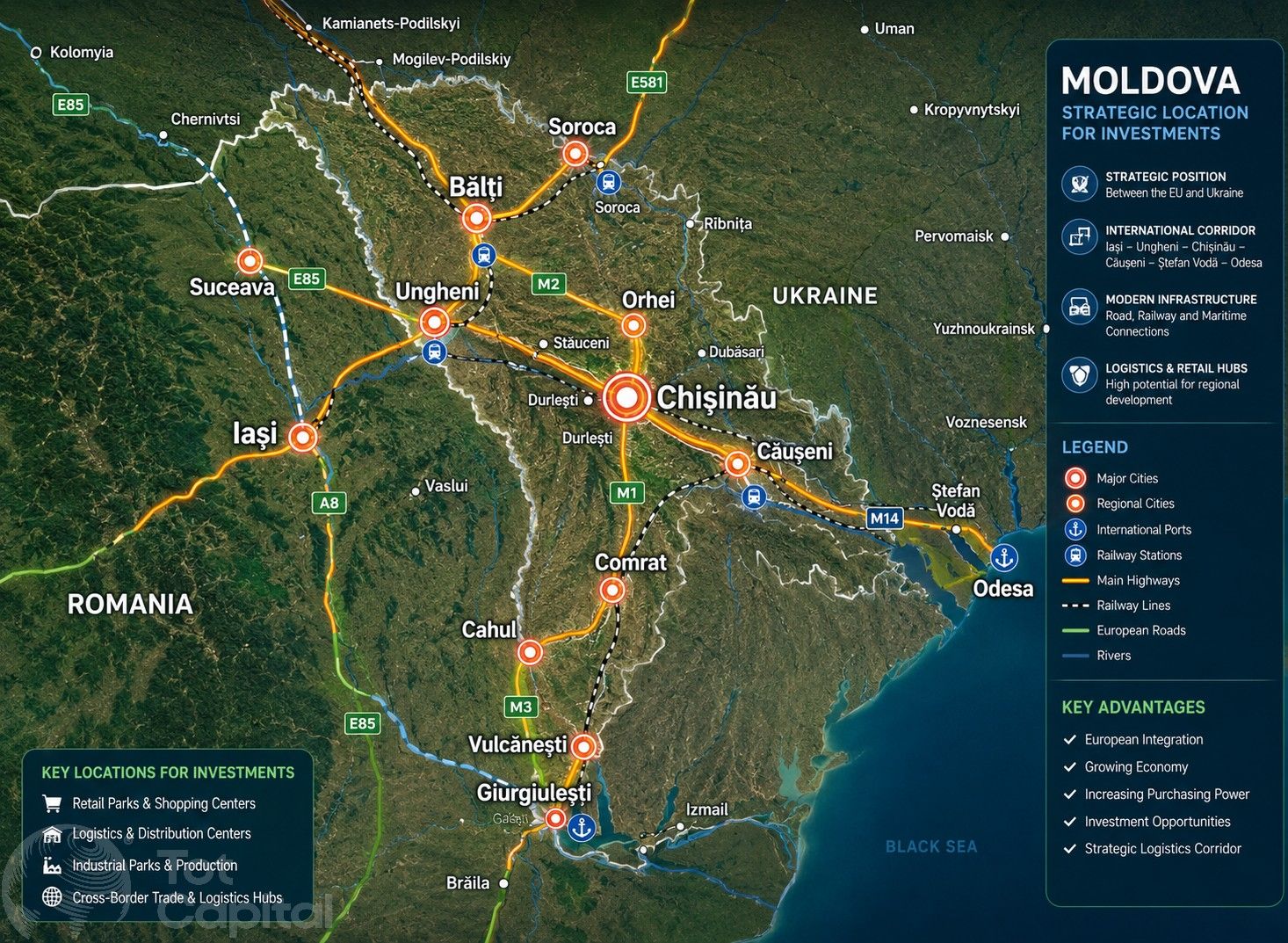
The Republic of Moldova is strategically positioned between the European Union and Ukraine, with strong long-term potential for the development of regional retail, logistics, warehousing and distribution infrastructure.
Key Growth Factors
- Accelerated European integration;
- The future reconstruction of Ukraine;
- Strategic international corridor:
Iasi – Ungheni – Chisinau – Causeni – Stefan Voda – Odessa; - Development of road, rail and maritime infrastructure;
- Increased investment in real estate and trade;
- Increasing wages and consumer purchasing power.
General Economic Indicators
Population and Purchasing Power
- Population of the Republic of Moldova: approximately 3 million inhabitants;
- Average monthly salary: approximately €700 and constantly increasing;
- Strong seasonal labor migration;
- Annual remittances exceeding €3 billion;
- Continuous growth in private consumption and investments.
Real Estate Market


In the last 5 years:
- residential real estate prices in Kishinev increased from approximately €700/m² to €1,700/m²;
- capital appreciation exceeded 120%;
- The annual appreciation of commercial and logistics assets is estimated at:
10–15% annually, with even higher growth in certain sectors.
Average Inflation
- approximately 5% annually.
Average Investment Recovery Period
- 8–10 years.
Regional Economic Structure
1. Southern Region


Main Development Center
- Cahul — the economic capital of southern Moldova.
Strategic Cities
- Comrat
- CAUSENI
- Vulcăneşti
Advantages
- direct connection with Romania and Ukraine;
- access to Giurgiulesti International Free Port;
- strategic railway infrastructure;
- high industrial and logistical potential.
2. Central Region

Main Center
- Kishinev
Satellite Cities
- Orhei
- STAUCENI
- Durlesti
- DUBASARI
Advantages
- the highest concentration of population;
- financial and administrative center;
- strong consumer demand;
- accelerated growth of the real estate market;
- strong potential for modern retail and regional logistics.
3. Northern Region


Main Regional Center
- Balti — the economic capital of northern Moldova.
Important Cities
- Ungheni
- Sorocaba
Advantages
- proximity to Romania;
- industrial and logistics development potential;
- regional labor availability;
- strategic position for distribution operations in the north.
International Strategic Logistics Corridor
Main Axis
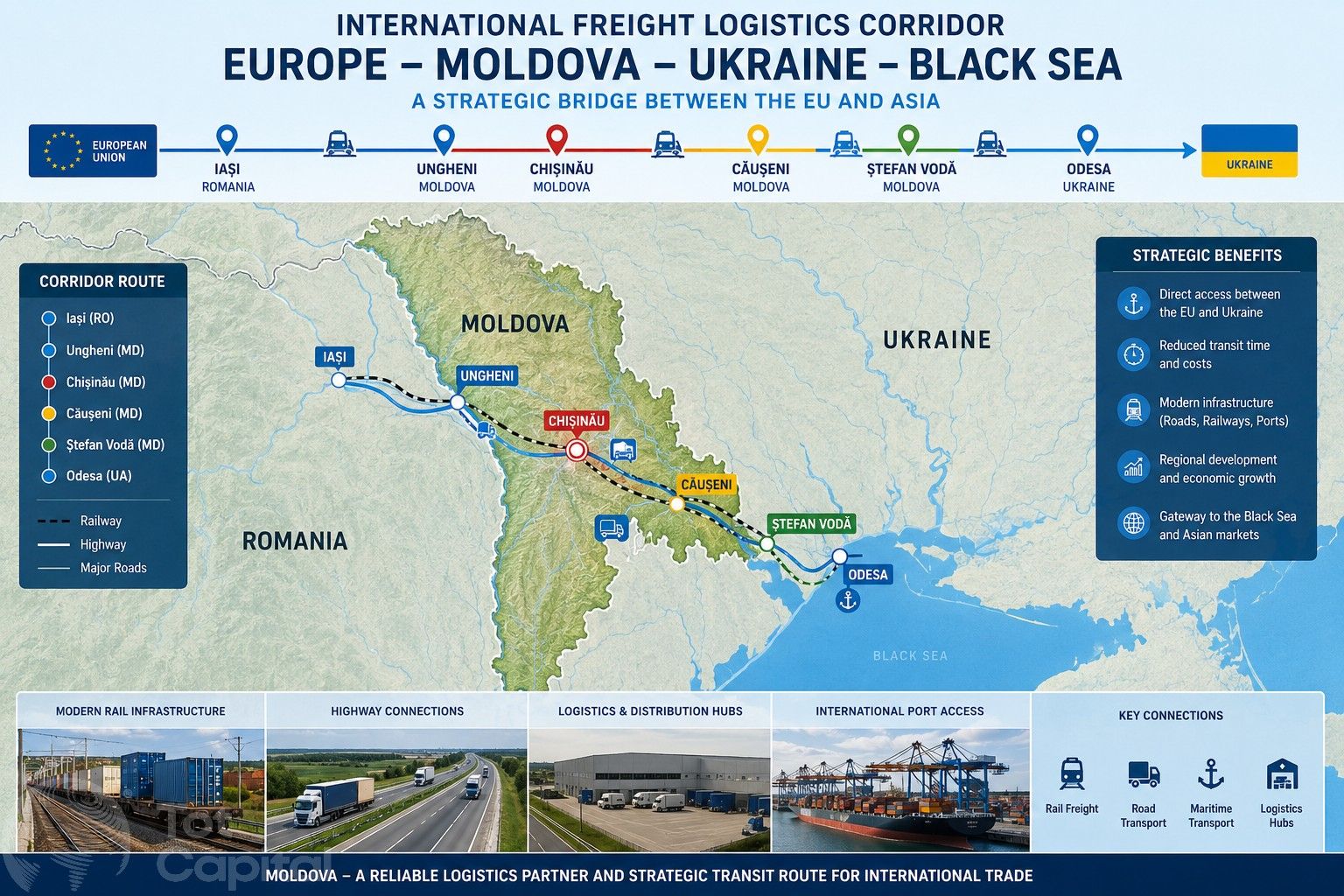
Iasi – Ungheni – Chisinau – Causeni – Stefan Voda – Odessa


This corridor has the potential to become a major regional logistics route, connecting:
- European union;
- Ukraine;
- the Black Sea region;
- Central Asia.
Strategic Potential
- regional logistics hub;
- distribution centers;
- cargo terminals;
- industrial parks;
- regional shopping centers.
Retail and Logistics Development Concept
1. Retail Shopping Centers
Major Cities
- Kishinev
- Balti
- Ungheni
Recommended Format
- land up to 5 hectares;
- commercial area:
5,000–15,000 m².
CONCEPTS
- retail of building materials;
- hypermarkets;
- entertainment areas;
- food court areas;
- service areas.
2. Medium and Small Cities
Recommended Format
- land up to 2 hectares;
- commercial area:
3,000–5,000 m².
Target Cities
- Sorocaba
- CAUSENI
- Comrat
- Orhei
- Cahul
3. Logistics and Warehousing


Recommended Format
- lands over 10 hectares;
- Class A logistics warehouses;
- regional storage facilities;
- cross-docking terminals;
- international distribution infrastructure.
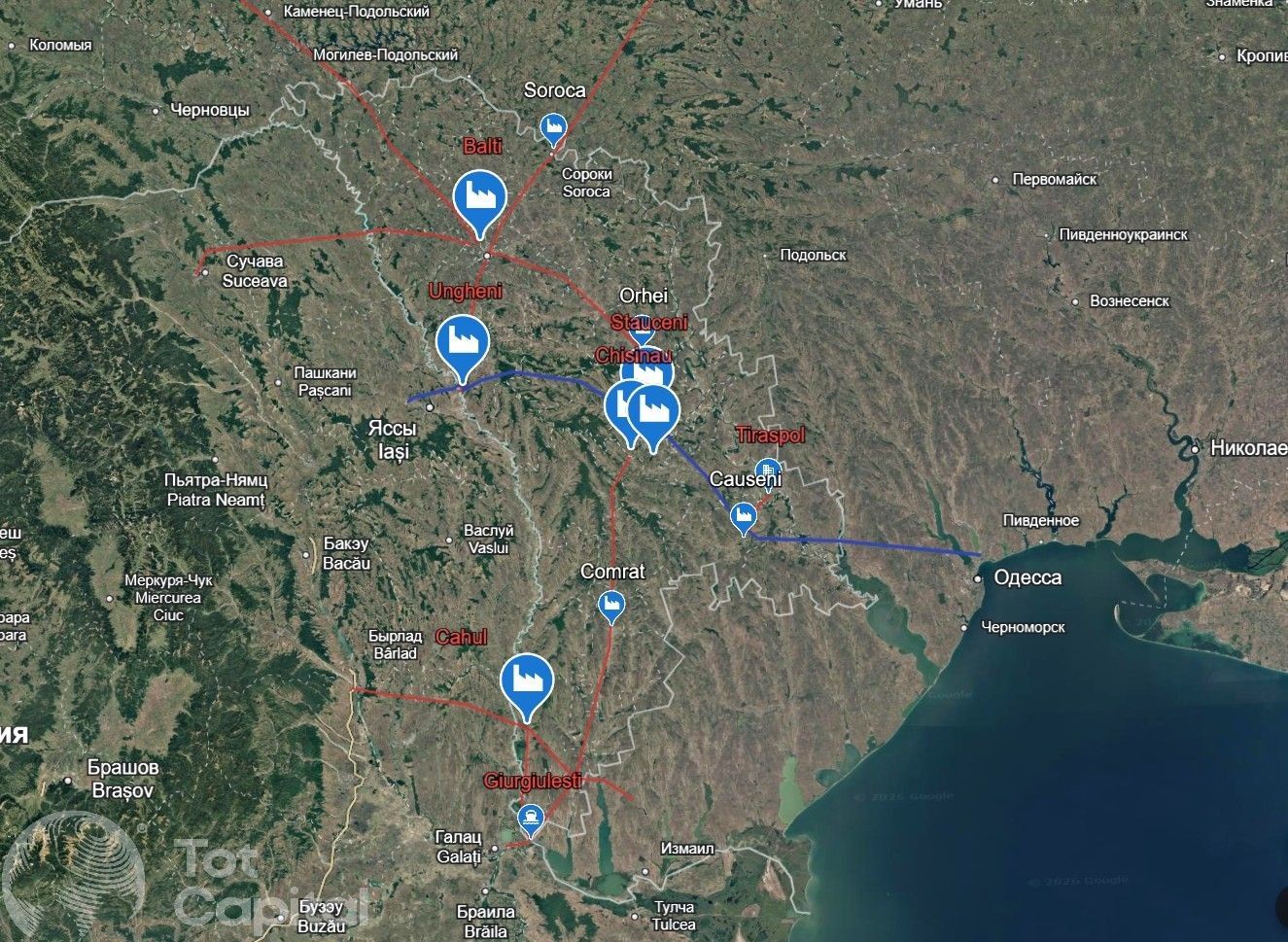
Strategic Locations
- Chisinau;
- Ungheni;
- Balti;
- Vulcanesti.
- Causeni
Competition Analysis
Food Retail Sector
Main Competitors
- Linella

- Local

The market remains fragmented and insufficiently modernized, especially in regional cities.
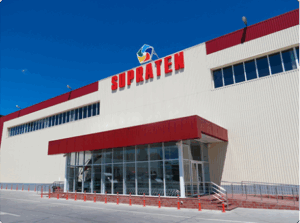
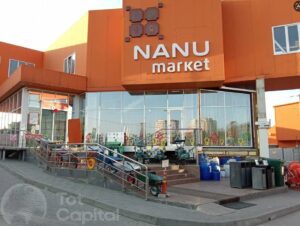
Construction Materials Sector
Main Competitors
- Overvoltage
- Nanu Market
Current limitations:
- limited regional expansion;
- underdeveloped logistics;
- lack of large integrated shopping centers.
Logistics and Warehousing Sector
The logistics sector in Moldova remains significantly underdeveloped.
Current Market Situation
- lack of national logistics networks;
- strong market demand for modern storage facilities;
- growing demand for:
5,000–10,000+ m² logistics and production spaces; - most of the existing facilities are outdated Soviet-era warehouses;
- insufficient supply of modern Class A facilities.
The Competitive Landscape
- predominantly local capital ownership;
- international competitors are practically absent;
- The sector is currently coming to the attention of institutional and international investors.
This creates significant first-mover advantages for large-scale logistics investments.
Investment Costs and Financial Indicators
Retail Land Prices
- €50–200/m².
Commercial Construction Costs
- €1,000–1,500/m².
Logistics Land Prices
- €10–50/m².
Class A Warehouse Construction Costs
- €500–800/m².
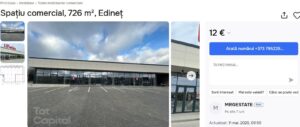
Retail Rents
- approximately €15/m² + VAT.


Logistics Rentals
- approximately €5/m² + VAT.


"The Tax System"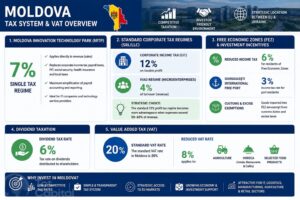
💻 Moldovan Technological Innovation Park (MITP)
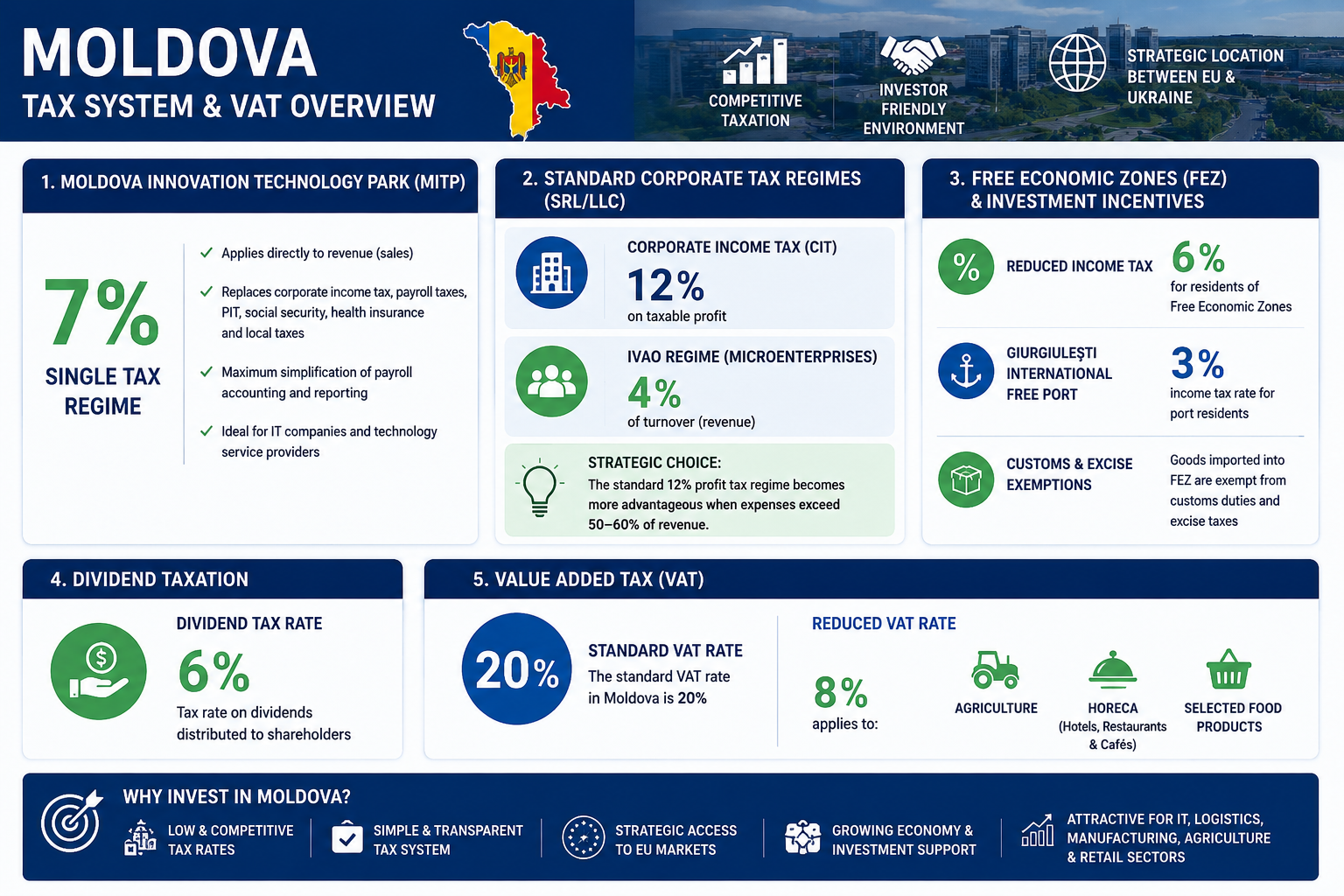
Single Tax Regime of 7%
- A unified tax of 7% is applied directly to the company's income (sales turnover).
- This regime replaces:
- corporate income tax,
- payroll taxes,
- personal income tax,
- social security contributions,
- medical insurance contributions,
- local taxes.
- Simplified payroll administration:
payroll accounting and reporting are significantly reduced and simplified.
🏢 Standard Corporate Taxation Regimes (SRL)
Corporate Income Tax (CIT)
- Standard corporate tax rate:
12% of taxable profit.
IVAO Regime (Micro-Enterprise Tax)
- Tax rate:
4% of turnover (gross income).
Strategic Fiscal Choice
- The standard 12% profit taxation regime becomes more advantageous when operating expenses exceed approximately 50–60% of total income.
🌐 Free Economic Zones (FEZ) and Investment Incentives
Reduced Income Tax
- Residents of Free Economic Zones in Moldova benefit from a reduced corporate tax rate of:
6%.
Giurgiulesti International Free Port
- Companies operating within Giurgiulesti International Free Port benefits from an even lower income tax rate of:
3%.
Customs and Excise Exemptions
- Goods imported into Free Economic Zones are exempt from:
- customs duties,
- excise duties,
- certain import-related taxes.
📊 Dividend Taxation and VAT
dividends
- The tax rate on dividends distributed to shareholders is only 6%.
Value Added Tax (VAT)
- The standard VAT rate in Moldova is 20%.
- Reduced VAT rates 8% applies to:
- agriculture,
- HoReCa (Hotels, Restaurants and Cafes),
- selected food products.
Advantages of Investing in Moldova
Key Strengths
- strategic regional location;
- European integration process;
- development costs still competitive;
- economic growth potential;
- underdeveloped and unsaturated market;
- increasing purchasing power;
- major logistical potential;
- strong appreciation of real estate assets.
risks
- infrastructure still under development;
- political and geopolitical risks in the region;
- labor migration;
- relatively small domestic market.
Strategic Conclusion
The Republic of Moldova has strong long-term potential for the development of:
- regional shopping centers;
- modern retail infrastructure;
- logistics and distribution facilities;
- industrial parks;
- international logistics hubs.
Corridor development:
Iași - Ungheni - Chișinău - Odessa could transform Moldova into a strategic logistics gateway between the European Union and Ukraine.

Investments made in the next 5–10 years could benefit from:
- accelerated asset appreciation;
- growing commercial demand;
- infrastructure expansion;
- increasing regional and international trade flows.
Page Views
Related Properties